
Autumn Budget 2025: What It Really Means Businesses and Individuals –Tax Care Accountants’ Analysis
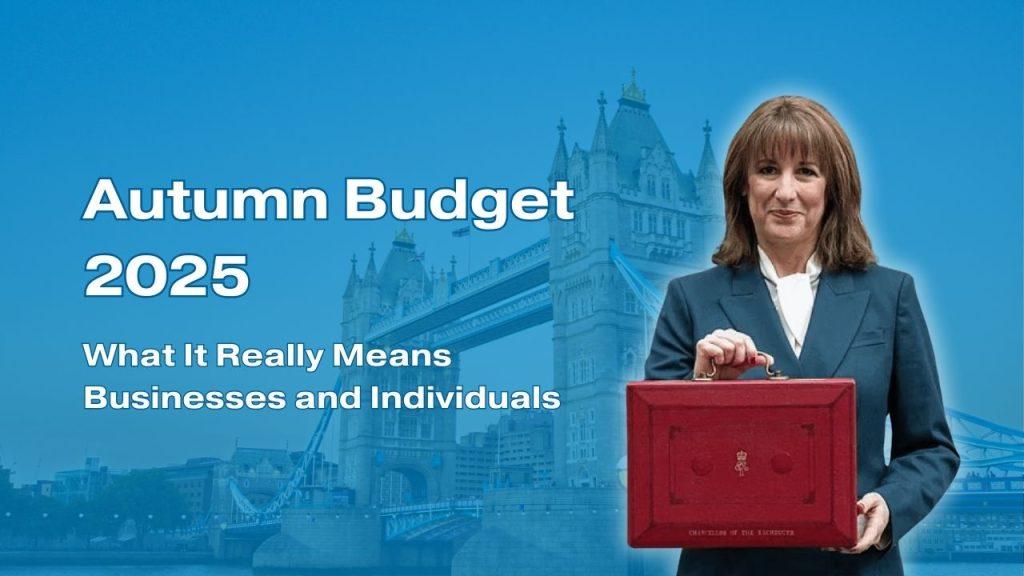
The Autumn Budget delivered on 26 November reshapes not just how you run your business, but how your family’s finances work too. This isn’t simply a business tax event, it’s a comprehensive restructuring that touches your personal income, family support, savings, investments, pensions, and the way your business operates. Here is Tax Care Accountants’ analysis on autumn budget 2025.
Table of Contents
Part One: The Personal Impact, Your Income, Taxes, and Family Support
Frozen Tax Thresholds: The Slow Squeeze on Your Household Budget
The most significant personal tax change is deceptively simple: tax thresholds remain frozen until April 2031. Your personal tax allowance stays at £12,570 and the higher rate threshold remains at £50,270. For Scotland, these thresholds differ slightly under the devolved system.
This doesn’t sound dramatic until you work through the numbers. As your salary increases, whether through business success, pay rises, or bonus distributions, you automatically slide into higher tax brackets without any official rate change. This is fiscal drag in its purest form.
For a household earning £60,000 in 2025, the frozen allowance means that by 2031, when nominal wages may have risen 15-20%, the effective tax rate climbs substantially. Someone earning £70,000 by 2029 would have paid less tax had thresholds risen with inflation. This compounds year after year.
The impact accelerates for higher earners. A director extracting £80,000 from their business finds themselves paying 40% marginal tax on income above £50,270, a burden that grows heavier as the real value of that threshold diminishes.
Dividend Income: Your Business Profits Face Higher Personal Tax
From April 2026, dividend tax rates rise significantly. The ordinary rate increases from 8.75% to 10.75%, and the upper rate jumps from 33.75% to 35.75%. The additional rate remains at 39.35%. The £500 dividend allowance provides some cushion, but only for modest dividend distributions.
For owner-managers of limited companies, this creates a real decision point. If you currently extract profits through a combination of salary and dividends, you’ll see your personal tax bill rise noticeably. A director taking £30,000 in dividends annually sees an additional £600 in tax. At £50,000 in dividends, the increase reaches £1,000 per year.
This change compounds with the frozen salary thresholds. You face higher tax on your salary (through fiscal drag) and higher tax on your dividends simultaneously. The cumulative effect meaningfully reduces the money available for personal use, reinvestment, or pension savings.
Property and Savings Income: A Three-Tier Tax System from April 2027
From April 2027, income from property and savings faces fundamental restructuring. New separate tax rates apply: 22% basic rate, 42% higher rate, and 47% additional rate, matching revised savings income rates.
For individuals, this matters significantly. A landlord earning £40,000 salary plus £25,000 rental income faces very different tax treatment than before. Under the old system, the rental income was taxed at standard income tax rates. Now it’s treated as a distinct category with its own bands. The combined effect can push effective tax rates substantially higher.
Existing exemptions like tax-free interest allowances for basic and higher rate taxpayers remain, but the scope narrows. Basic rate taxpayers get £1,000 of tax-free interest; higher rate taxpayers get £500. Above those thresholds, savings income is taxed at the new rates.
For retirees living on pension income plus modest savings or rental income, this creates a painful squeeze. Someone with £30,000 pension income plus £15,000 rental income sees the rental portion taxed at 42%, dramatically higher than the 20% rate they’d have faced previously.
This actively discourages personal investment in property and savings at a time when individuals should be building wealth outside pensions. It creates a two-tier system: small investors benefit from protective allowances; serious investors or landlords face material tax increases.
Pensions: The 2029 Salary Sacrifice Cap Affects Your Retirement Planning
From April 2029, salary sacrifice pension contributions face a new National Insurance cap. Only the first £2,000 per person per year remains exempt from National Insurance. Contributions above this threshold incur both employer and employee NICs.
This fundamentally changes pension planning for higher earners and business owners. If you currently contribute £10,000 annually via salary sacrifice to a pension, the first £2,000 remains NI-free. The remaining £8,000 attracts both employee and employer NICs, typically 10% employee and 15% employer combined. That’s roughly £2,000 in additional NICs on your pension contribution.
The government frames this as protecting basic rate taxpayers (technically 74% using salary sacrifice remain unaffected). But directors, senior staff, and business owners lose meaningful tax efficiency precisely when retirement planning should be prioritised.
What makes this worse: you’re losing the benefit while still building the pension pot. You’re not getting more pension for your money, you’re just getting hit with NICs on top. For someone aged 45-50, with 15-20 years until retirement, this represents thousands of pounds in lost tax relief over time.
The timing matters. You have until April 2029 to extract maximum value from existing arrangements. After that, pension contributions over £2,000 annually become less tax-efficient.
Savings and ISAs: Lower Limits from April 2027
From 6 April 2027, cash ISA annual limits reduce to £12,000, down from £20,000 currently. The overall ISA subscription limit remains £20,000, meaning you can still use the same total allowance, but it’s split differently.
This matters if you favour cash ISAs. Previously, you could shelter £20,000 of cash in a tax-free ISA annually. Now it’s £12,000 for cash, with the remaining £8,000 available for other ISA types (stocks and shares, innovative finance, lifetime).
For retirees and risk-averse savers, this is a genuine restriction. The safety of a cash ISA appeals to those uncomfortable with stock market volatility. The lower limit forces decisions about how to invest the remaining £8,000, whether to use stocks and shares ISAs (which require investment risk tolerance) or accept taxation on savings outside ISAs.
Savers aged 65 and over retain the ability to save £20,000 in cash ISAs annually, a small mercy, but one that doesn’t help younger savers.
Junior ISAs, Child Trust Funds, and Lifetime ISAs remain unchanged at their current limits until April 2031, but the cash ISA restriction means families need to reassess their tax-efficient savings strategy.
Household Support: The Two-Child Limit Removal and Cost-of-Living Help
On the positive side, the removal of the two-child limit in Universal Credit from April 2026 is significant for families. The government expects this change to lift 450,000 children out of poverty. If your household receives UC, this matters directly.
Previously, families received full support for only two children; the third and subsequent children didn’t qualify for the Child Element. This created a perverse incentive against larger families and pushed 450,000 children below the poverty line. From April 2026, families receive full support for all children.
The Standard Allowance (the basic amount all eligible UC households receive) increases by over 6% in April 2026. Other working-age benefits increase by 3.8% in line with September 2025 CPI. For families supporting children, the expansion of free breakfast clubs (rolling out 2,000 schools in 2026-27) and free school meals eligibility (extending to all pupils with a parent receiving UC, lifting 100,000 children out of poverty) provide meaningful support.
Beyond UC, cost-of-living measures include:
- Energy bills projected to drop by around £150 annually from April 2026 through reduced levies and expanded Warm Home Discount (now covering 6 million households)
- Rail fare freeze for one year from March 2026, saving average passengers £300 on expensive routes
- Extended £3 bus cap through March 2027 covering 5,000 routes
- Fuel duty extension until 31 August 2026, saving households with cars approximately £89 annually
- Prescription charges frozen at £9.90 for single items from April 2026
- Free morning-after pill access in pharmacies, eliminating postcode lottery on emergency contraception
- State Pension increase of 4.8% from April 2026 (up to £575 additional annually for eligible pensioners)
For households with tight budgets, these measures provide real relief. The cumulative effect, energy, transport, prescriptions, childcare through free meals, reduces household outgoings meaningfully.
Council Tax on High-Value Homes: A New Surcharge from April 2028
From April 2028, homeowners with properties worth £2 million or more face a new High Value Council Tax Surcharge in England. The charge starts at £2,500 per year, rising to £7,500 for properties valued above £5 million. Fewer than 1% of properties fall into scope.
For ultra-wealthy homeowners, this is meaningful but manageable. For those whose properties have appreciated significantly (particularly London homeowners who’ve owned for 20+ years), the surprise may be greater. The surcharge is based on updated valuations to identify properties above the threshold.
The government justifies this by noting that typical family homes across England currently pay more in Council Tax than £10 million properties in Mayfair, an obvious fairness point, but one that catches property owners who’ve built substantial home equity.
Part Two: The Business Impact – Operations, Taxes, and Compliance
Your Business Income: Dividend and Remuneration Strategy Under Pressure
As a business owner, you face a complex decision about how to extract money from your company. Historically, many owner-managers took a modest salary (often around the National Insurance threshold of approximately £12,570) plus dividends to minimise tax and NICs.
The frozen salary thresholds mean this strategy becomes less attractive. As inflation erodes the real value of the £12,570 personal allowance, taking a salary at that level leaves more profits in the company subject to Corporation Tax (25%), which you then extract as dividends taxed at 10.75% or higher.
Meanwhile, your dividend tax rates are rising from April 2026. The combination means your blended tax rate on profits extracted as dividends climbs. For a company earning £100,000 profit, extracting it as salary and dividends looks different in 2026-2031 than it does today.
You need to model your specific situation. For some, increasing salary (and accepting higher employee and employer NICs) becomes more attractive. For others, retaining profits in the company and timing dividends strategically becomes the better approach. There’s no universal answer, but delaying this decision costs money.
Capital Investment: The Changing Relief Landscape
Your business investment decisions face a fundamentally altered landscape. From 1 January 2026, a new 40% First Year Allowance (FYA) becomes available for main-rate assets, covering most spending on assets for leasing and expenditure by unincorporated businesses. You can write off 40% of qualifying capital expenditure in year one.
This sounds generous. It is, but simultaneously, from 1 April 2026 (Corporation Tax) and 6 April 2026 (Income Tax), Writing Down Allowances on main-rate assets reduce from 18% to 14%. You get faster early relief but slower medium-term relief.
For businesses planning multi-year capital programs, this creates timing complexity. Should you accelerate purchases into early 2026 to capture the higher first-year allowance? Or would that distort genuine business needs and create cash flow issues?
Equally important: cars, second-hand assets, and assets for leasing overseas don’t qualify for the new 40% FYA. Your investment strategy must categorise assets carefully and plan acquisition timing accordingly.
The changing relief structure particularly affects labour-intensive businesses relying on regular asset replacement, transport companies, manufacturing firms, construction operations. The shift from predictable medium-term relief (18% annually) to front-loaded but slower ongoing relief creates planning uncertainty.
Employment Costs: Rising Wage Bills and Pension Complications
From April 2026, your payroll costs rise across the board. The National Living Wage increases to £12.71 per hour (up from £12.17), a 4.4% jump. The 18-20 age group moves from £10.00 to £10.85. Ages 16-17 and apprentices increase from £7.55 to £8.00.
For labour-intensive sectors, hospitality, care, retail, construction, this compounds existing margin pressures. A care home operator running 24/7 with dozens of staff faces real financial strain. A restaurant with 20 staff suddenly absorbs significantly higher payroll costs.
More subtly, the salary sacrifice pension cap from April 2029 affects your business too. Currently, you might offer salary sacrifice pensions as an employee benefit, good tax efficiency for employees, NI savings for you both. From 2029, only the first £2,000 per employee remains NI-free. Above that, you pay employer NICs (15%) on contributions.
This changes the attractiveness of offering enhanced pension benefits. Some employers will stop offering salary sacrifice above £2,000. Others will absorb the NI cost to retain talent. But the benefit-cost calculation shifts materially.
Business Rates: Relief and Revaluation Complexity
If your business operates in retail, hospitality, or leisure, the new permanently lower business rates multipliers (5p below national equivalents from 2026-27) are genuinely welcome. The small business RHL multiplier sets at 38.2p, standard at 43p. This benefits over 750,000 properties and provides real, lasting cost relief.
But this comes with counterweights. High-value properties with rateable values of £500,000 or more face higher rates (50.8p multiplier in 2026-27, 2.8p above the national standard). Following business rates revaluation, the small business multiplier drops to 43.2p and standard to 48p, lower than current rates, but still requiring financial planning.
The government provides a £4.3 billion support package over three years for businesses affected by revaluation, including Transitional Relief for the largest ratepayers. Small Business Rates Relief extends to two years when expanding into new properties. This support is temporary, but the rates changes are permanent.
Warehouse and distribution businesses, often paying high rateable values, will see rates increases. Online retailers using large facilities will bear the higher rates burden explicitly. The policy shifts the tax burden toward capital-intensive businesses toward less labour-intensive models.
Capital Gains Tax Relief for Employee Ownership Trusts: Lower Incentives
If you’ve considered selling your business to an Employee Ownership Trust (EOT) as an exit strategy, the game has changed. CGT relief reduces from 100% to 50% on qualifying disposals, effective immediately from 26 November 2025.
Originally intended to encourage employee ownership, the relief cost exploded. Initial 2013 projections suggested the entire EOT regime would cost less than £100 million in 2018-19. By 2021-22, the CGT relief alone reached £600 million. Without intervention, forecasts suggested £2 billion costs by 2028-29.
The 50% relief remains attractive, it’s still meaningful tax relief on a significant life transaction, but the calculus is weaker. If you had £5 million of gains and expected 100% relief, you’d owe no CGT. At 50% relief, you’d owe approximately £600,000 (on the £2.5 million unrelieved portion at 20% CGT).
For business owners considering this exit route, the timing now matters more. If you can complete an EOT transaction before 26 November 2025 (retroactively, some cases qualify), you’d capture the higher relief. Otherwise, the 50% relief applies.
Corporation Tax and Late Filing: Stricter Enforcement
Corporation Tax rates remain unchanged- 25% main rate, 19% small profits rate. But penalties for late Corporation Tax return filing double from 1 April 2026. This signals heightened expectations for timely submissions and increased enforcement consequences.
More broadly, HMRC is shifting toward stricter compliance enforcement across business tax. The Budget mentions 350 new HMRC investigators dedicated specifically to tackling small business tax fraud, renewed focus on disguised remuneration and Loan Charge cases, and new settlement routes for historic disputes.
Tougher Construction Industry Scheme oversight intensifies. Cryptocurrency reporting requirements tighten: from 2026, UK crypto platforms report customer data directly to HMRC. The whistleblower reward scheme offers up to 30% of recovered tax in high-value fraud cases.
This environment demands genuine compliance, not technical cleverness. Your tax affairs need to be defensible, not just compliant. The difference is subtle but critical. An aggressive position that passes initial scrutiny might not survive HMRC investigation. Straightforward, documented positions are safer.
VAT and Digital Compliance: The Quiet Revolution
From 1 April 2029, mandatory e-invoicing applies to all VAT-registered businesses. You must issue VAT invoices electronically in a standardised format. For many businesses, this requires systems integration with accounting software, potential vendor updates, and process changes.
If you’re still relying on spreadsheets or outdated accounting systems, this creates immediate pressure to upgrade. The expense is real. The disruption is real. But the logic is sound: digital systems produce better compliance and reduce administrative burden long-term.
From 2026-2028, HMRC systems will deploy digital prompts in tax software, flagging potentially incomplete VAT or Corporation Tax returns before submission. This nudges compliance but also means filing errors get caught systematically.
From 2026 onwards, HMRC gains flexible authority to adjust Making Tax Digital rules, including penalties and exemptions, without new legislation. This means compliance requirements could tighten further without Parliamentary debate, something to monitor.
On specific VAT matters:
- A new VAT relief from 1 April 2026 supports businesses donating goods to charities, making charitable donations more tax-efficient
- Ride-sharing taxi apps face new restrictions from 2 January 2026. All principal PHVOs nationally and all London PHVOs must pay VAT at standard rates, preventing exploitation of the tour operator scheme
- Custom duty relief on low-value imports (£135 or less) removes from March 2029 at the latest, subjecting these items to standard customs duty. Online retailers relying on low-value import exemptions face changed economics
Motoring and Transport: EV Strategy and Rising Costs
From April 2028, a new Electric Vehicle Excise Duty (eVED) introduces a per-mile charge for electric and plug-in hybrid cars. Drivers pay alongside existing Vehicle Excise Duty. Electric vehicles pay 3p per mile; plug-in hybrids pay 1.5p (half the EV rate). An average EV driver pays around £240 annually or £20 monthly.
For businesses operating vehicle fleets, this changes the cost calculus. Currently, fuel duty creates ongoing costs. eVED shifts this to a mileage-based model. For intensive users (delivery companies, taxis), the costs may exceed current fuel expenses. For light users, the impact is smaller.
To support the transition, significant measures accompany eVED:
- The Electric Car Grant extends with £1.3 billion additional funding through 2029-30
- VED Expensive Car Supplement threshold increases from £40,000 to £50,000 from 1 April 2026, saving over a million motorists £440 annually
- 10-year 100% business rates relief applies to eligible EV chargepoints and EV-only forecourts
- 100% FYAs extend an additional year for zero-emission cars and EV chargepoint infrastructure
- £100 million additional investment in EV charging infrastructure (on top of £400 million from Spending Review 2025)
- £100 million resource funding supports local authority EV chargepoint staff training and deployment
- Government will review public EV charging costs (Q1 2026 start, Q3 2026 report)
For businesses considering fleet electrification, this infrastructure investment and support framework makes the case stronger. But you need to model costs carefully, considering eVED rates from 2028 onwards.
The fuel duty cut extends until 31 August 2026, providing continued relief. After that, rates gradually return to March 2022 levels by March 2027. For businesses relying heavily on fuel, this extension helps short-term, but longer-term cost increases are locked in.
Duties and Compliance: Multiple Changes
Vaping products: A new duty of £2.20 per 10ml of vaping liquid from 1 October 2026. If you’re in vaping retail, your cost structure changes materially.
Tobacco: Duty increases by 2% above RPI inflation, effective 6pm on 26 November 2025. Tobacco retail margins face immediate pressure.
Alcohol: Duty uprates with RPI on 1 February 2026, maintaining real-terms value. Hospitality businesses may face cost pressures.
Air Passenger Duty: From 1 April 2027, all APD rates uprate with RPI. For businesses arranging employee travel or travel-intensive operations, costs gradually climb.
Online gambling: Remote Gaming Duty increases from 21% to 40% from April 2026 (reflecting higher harm), while a new Remote Betting Rate of 25% launches April 2027. Remote horserace betting remains 15%. Bingo Duty abolishes April 2026, with £26 million additional Gambling Commission funding over three years. If you’re in gaming or betting, this represents dramatic cost increases.
Looking for Personal Tax Accountant
Part Three: Integrated Planning for Owners and Families
The Timing of Key Changes: A Practical Calendar
When changes take effect helps you plan strategically:
April 2026:
- National Living Wage increases to £12.71/hour; all minimum wages rise
- Dividend tax rates increase (ordinary 8.75%→10.75%, upper 33.75%→35.75%)
- New 40% First Year Allowance available (from January 2026) for capital investment
- Two-child limit in Universal Credit removed, lifting 450,000 children out of poverty
- Standard Allowance increases 6%+; other benefits increase 3.8%
- Free breakfast clubs expand (2,000 new schools)
- Energy bills projected to drop £150 on average
- Fuel duty extension provides continued relief
- Prescriptions frozen at £9.90
- VED Expensive Car Supplement threshold increases (£40,000→£50,000)
- Writing Down Allowances reduce (18%→14%)
- Van Benefit Charge and Car Fuel Benefit uprate by CPI
- New VAT relief for charity donations
- Late Corporation Tax filing penalties double
January 2026:
- New 40% First Year Allowance introduced
October 2026:
- Vaping products duty introduced (£2.20/10ml)
December 2025:
- Tobacco duty increases take effect (2% above RPI)
February 2026:
- Alcohol duty uprates with RPI
April 2027:
- Property income taxed at new rates (22%, 42%, 47%)
- Savings income taxed at new rates (matching property rates)
- Cash ISA limits reduce to £12,000
- APD rates uprate with RPI
- High Value Council Tax Surcharge announced (but not effective until 2028-29)
- New Remote Betting Rate (25%) under General Betting Duty launches
October 2027:
- Salary sacrifice pension cap takes effect (only first £2,000 per person exempt from NICs)
April 2028:
- Electric Vehicle Excise Duty launches (3p/mile for EVs, 1.5p for plug-in hybrids)
- High Value Council Tax Surcharge takes effect (£2,500 for £2m-£5m properties, £7,500 for £5m+)
April 2029:
- Mandatory e-invoicing for all VAT-registered businesses
- Salary sacrifice pension contributions above £2,000 subject to employer and employee NICs
March 2029:
- Customs duty relief on low-value imports (≤£135) removes
Strategic Questions for Families and Business Owners
Working through these questions with your accountant or financial adviser is essential:
On Personal Finances:
- Given frozen tax thresholds through 2031, how does that affect your take-home pay expectations? Should you adjust household budgeting?
- Are you maximising pension contributions before the 2029 salary sacrifice cap takes effect? How much can you contribute tax-efficiently in 2026-2029?
- Do you hold ISAs? Should you accelerate deposits before cash ISA limits reduce in April 2027?
- If you hold property or savings income, how do the April 2027 rate changes affect your after-tax returns? Should you restructure investments before then?
- Are your household finances positioned to benefit from cost-of-living measures (energy bill reductions, transport, childcare) or do you need alternative planning?
- If you own a property worth £2m+, what does the April 2028 Council Tax surcharge mean for your long-term housing decision?
On Business Finances:
- Is your current salary and dividend extraction strategy still optimal given frozen thresholds, higher dividend tax, and upcoming pension changes? What should your remuneration structure be in 2026-2031?
- Do you have capital investment plans? Should you accelerate purchases into early 2026 to capture the 40% FYA, or wait for more stability?
- How do rising minimum wages affect your payroll costs and pricing? Can you pass these increases to customers?
- Are your payroll, CIS arrangements, and contractor relationships genuinely defensible? What happens if HMRC investigates?
- What’s your timeline for upgrading systems to meet MTD and e-invoicing requirements by April 2029?
- If you operate vehicles, what’s your EV transition strategy? When should you convert, given eVED rates from 2028?
- Do you hold cryptocurrency? Is your tax reporting complete and compliant with the new HMRC reporting requirements?
- If you’ve considered selling to an EOT, does the halved CGT relief change your timeline or decision?
On Household Taxes:
- Given dividend tax increases (April 2026) and new property/savings rates (April 2027), what’s your blended tax rate on different income sources? Should you rebalance?
- How do you structure household finances across spouses to minimise overall tax?
- Are you claiming all available allowances (personal savings allowance, dividend allowance, etc.)?
- Should you take action before deadlines (pension contributions before 2029, ISA deposits before April 2027, property restructuring before April 2027)?
On Risk and Compliance:
- With 350 new HMRC investigators focusing on small business fraud, are your tax affairs genuinely defensible?
- Have you addressed any historic tax issues, or might the HMRC enforcement intensification affect you?
- Are you confident about Construction Industry Scheme compliance if you operate in construction?
- What’s your cryptocurrency reporting posture given tightened HMRC requirements from 2026?
The Bottom Line: A Year of Strategic Decisions
The Autumn Budget 2025 represents a turning point. It’s not a crisis, it doesn’t fundamentally break business models or family budgets. But it narrows margins and raises stakes simultaneously. The impact compounds across multiple changes happening at staggered intervals over the next four years.
For business owners, the challenge is multifaceted: managing rising employment costs, navigating changed investment relief structures, preparing compliance systems for digital maturity, and understanding how personal tax changes affect business remuneration strategy.
For families, cost-of-living measures provide real relief on energy and transport, but frozen tax thresholds and higher investment income tax create long-term squeeze.
The businesses and families that thrive through 2026-2031 will be those that treat this Budget not as a temporary disruption but as a structural shift requiring proactive planning. The time for strategic decisions is now, before April 2026 arrives and opportunities to restructure close.
Work with your accountant or financial adviser on the specific questions outlined above. Model your personal and business tax positions under the new rules. Make deliberate choices about remuneration, investment timing, pension planning, and compliance infrastructure. Those who do will navigate this successfully. Those who wait and react will find themselves playing catch-up from behind.

Outsourced Bookkeeping vs In-House: UK Cost Comparison
Compare outsourced bookkeeping vs in-house costs in the UK, including salary, employer NI, pension and software, plus when hiring becomes cheaper.

Self Assessment vs PAYE: What Is the Difference?
Self Assessment vs PAYE explained: how each system collects UK income tax, who uses which, the deadlines that apply, and what happens if you use both.
What Are Payments on Account and How Do They Work?
Payments on account are advance instalments towards your next Self Assessment bill. Learn who pays, how HMRC works out the amount, and how to reduce them.

What Is the SA104 Form?
Understand what the SA104 form is, who must complete it, and how SA104S differs from SA104F. A clear guide for UK partnership partners filing Self Assessment.
Client of the Month: M4 Handyman Ltd
Client of the Month: M4 Handyman Ltd The Work That

Why 1 in 5 Companies Still Have an Unverified PSC
Around 20% of UK companies have a PSC overdue on Companies House identity verification. Learn how to check your status, fix it, and avoid the common code mistake.