
SA800 Partnership Tax Return Explained: Who Must File, What to Include, and How to Submit
- By Tax Advisor at Tax Care Accountants
- July 22, 2026
Quick Overview
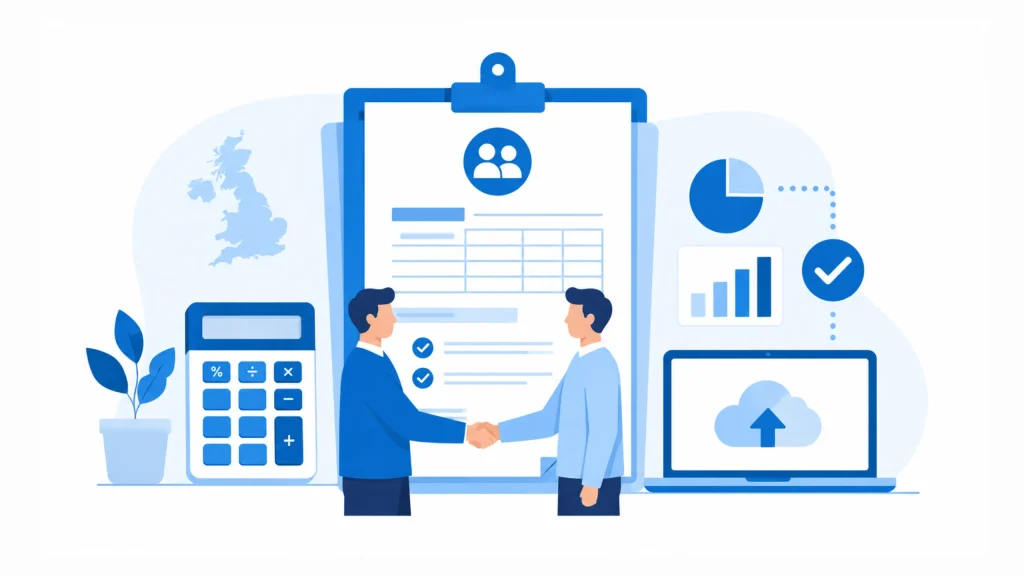
- The SA800 is HMRC’s Self Assessment form for UK partnerships, used to report the partnership’s income, allowable expenses, and how profits or losses are shared between partners.
- Most general partnerships, LLPs treated as partnerships for tax, and many landlord partnerships must file an SA800 when HMRC issues a notice to file.
- For partnerships with only individual partners, the paper deadline is 31 October and the online deadline is 31 January following the end of the tax year (5 April).
- Partnerships with only corporate partners have different deadlines, typically nine months for paper and twelve months for online filing.
- HMRC does not provide free software for filing SA800 online, so most partnerships use commercial software or an accountant.
- Each partner still files their own Self Assessment return (SA100 with SA104) reporting their share of the partnership’s profit or loss.
- Late filing triggers an automatic £100 penalty per partner, with further penalties escalating over time.
When you run a business as a UK partnership, HMRC doesn’t just look at the partners’ individual tax returns, it expects a separate return for the partnership itself. That return is called the SA800. It’s easy to get wrong, and mistakes are one of the main reasons partnerships end up facing avoidable penalties or lengthy follow-up questions from HMRC. In this guide, we’ll walk through what the SA800 partnership tax return is, who has to file it, what information you need, the key deadlines, and how to complete and submit it correctly.
Table of Contents
What Is the SA800 Partnership Tax Return?
The SA800 partnership tax return is the HMRC form used to declare a partnership’s total income, allowable expenses, and how the resulting profit or loss is divided between the partners for a given tax year. The partnership itself does not pay income tax on the profit. Instead, the SA800 records the figures so that each partner can then report their share of the profit or loss on their own Self Assessment return.
The form has a core eight-page section covering trading income, professional income, and interest from UK banks or building societies. Supplementary pages exist for other income types, such as UK property, foreign income, chargeable assets, and savings income. A partnership statement forms part of the return and shows exactly how the profit, loss, and other items are allocated to each partner.
Because the SA800 sits inside the wider Self Assessment system, the figures on it must line up with what each partner reports on their SA100 return and the partnership supplementary page, SA104.
Who needs to complete a SA800 partnership tax return?
A UK partnership must file an SA800 when HMRC issues a notice to file and the partnership carries on a trade, profession, or business, or receives certain types of taxable income. Even if the partnership has made a loss or been quiet during the tax year, a return is usually still required once HMRC has issued that notice.
The requirement generally applies to:
- General partnerships between two or more individuals or businesses.
- Limited liability partnerships (LLPs) that are treated as partnerships for tax purposes.
- Landlord and property partnerships that jointly own and let property as a business.
- Mixed partnerships that include both individual and corporate partners.
Rules can differ where a partnership has only corporate partners, and mixed-member partnerships can face more complex deadline calculations depending on the accounting date. If your partnership sits in either category, checking the position with an adviser is sensible before filing.
What Information Do You Need to Complete the SA800?
Before opening the form or logging into your software, it helps to have all the underlying information ready. Missing details are a common reason partnerships file late or make mistakes on the partnership statement.
Partnership details
- Registered partnership name and business address.
- Description of the business or professional activity.
- Accounting period covered by the return.
- Partnership Unique Taxpayer Reference (UTR).
Financial figures
- Trading or professional income for the period.
- Allowable business expenses in line with HMRC rules.
- Property income, if the partnership lets UK property.
- Any other relevant income, such as bank interest, foreign income, or gains on chargeable assets.
- Capital allowances where the partnership has qualifying assets.
Partner details
- Full name and address of each partner.
- Each partner’s individual UTR.
- Profit or loss sharing arrangement, either as a percentage or as specific amounts set out in the partnership agreement.
Preparing a clean set of partnership accounts first tends to save time. The figures on the SA800 should reconcile to those accounts, which reduces the risk of enquiries later.
SA800 Partnership Tax Return Deadlines and Dates
For partnerships with only individual partners, the paper SA800 must reach HMRC by 31 October following the end of the tax year on 5 April. If the return is filed online, the deadline extends to 31 January following the end of the tax year. Missing either deadline triggers an automatic £100 penalty for every partner, with additional penalties for continued delay.
There are variations to be aware of. Partnerships with only corporate partners typically have nine months for paper filing and twelve months for electronic filing from the end of the return period. Mixed-member partnerships have more complex deadlines linked to the accounting date. If HMRC issues the notice to file after 31 July, a partnership generally has three months to submit on paper, or until 31 January online if that falls later.
Filing method | General deadline (individual partners only) | Notes |
Paper SA800 | 31 October after the end of the tax year | Earlier deadline; less common in practice |
Online SA800 | 31 January after the end of the tax year | Requires HMRC-recognised commercial software |
Only corporate partners | Roughly 9 months (paper) or 12 months (online) | Different rules apply; verify current HMRC guidance |
Notice issued after 31 July | Three months from notice (paper) or 31 January online, whichever is later | Applies where late notice is given |
Deadlines and penalty amounts can change. Always check the current position on GOV.UK before submitting.
How to Complete the SA800 Partnership Tax Return (Step-by-Step Overview)
The mechanics of the SA800 are straightforward once your figures are ready. HMRC does not offer free software to submit the SA800 online, so most partnerships either use commercial software or ask an accountant to file on their behalf. A high-level process looks like this:
- Prepare your partnership accounts and gather supporting records for the period.
- Register the partnership for Self Assessment if this has not already been done, and check that you have the partnership UTR.
- Log in to your chosen HMRC-recognised software using your Government Gateway credentials, or hand the information to your adviser.
- Enter the partnership details, accounting period, and business description.
- Input the income and allowable expenses from your accounts, together with any property, foreign, or investment income on the relevant supplementary pages.
- Review the calculated profit or loss and complete the partnership statement, allocating the correct share to each partner based on the partnership agreement.
- Check every section carefully, submit the return before the deadline, and keep the electronic confirmation and a copy of the filed return.
The nominated partner signs off and submits the SA800, but every partner remains jointly responsible for the accuracy of what is filed.
Common SA800 Partnership Tax Return Mistakes to Avoid
Errors on the SA800 are not just an administrative headache. They can trigger HMRC enquiries, penalties, and knock-on corrections to each partner’s personal return. A few recurring issues stand out:
- Mismatched accounting periods. The dates on the SA800 do not match the partnership accounts, which usually happens when a business changes its year-end without adjusting the return.
- Treating drawings or partner “salaries” as expenses. Amounts paid to partners from profits are not deductible; they are part of the profit share.
- Missing or misclassified income. Overlooking rental income, foreign income, or interest, or entering it in the wrong section, creates reconciliation issues later.
- Profit allocations that do not match the partnership agreement. The split on the partnership statement should reflect the actual agreement in force during that period.
- Incomplete partner details. Missing UTRs or outdated addresses can hold up processing.
- Late filing. Assuming the paper deadline still applies when filing online, or vice versa, is a surprisingly common trigger for automatic penalties.
A quick review against the underlying accounts and the partnership agreement usually catches most of these before submission.
Do Partners Still Need Self Assessment Returns If the Partnership Files an SA800?
Yes. The SA800 reports the partnership’s overall position and each partner’s share, but every partner still files their own Self Assessment return using the SA100 and the partnership supplementary page, SA104. The partner’s own return brings in their share of the profit or loss, along with any other personal income such as employment, dividends, or interest, and it is on that individual return that Income Tax and Class 4 National Insurance are calculated.
For example, if the partnership reports £60,000 of taxable profit on the SA800 and two equal partners share it, each partner will include £30,000 as partnership profit on their own SA100 and SA104. Their final tax bill depends on their personal circumstances and other income.
When Should You Get Professional Help with Your SA800 Partnership Tax Return?
Straightforward SA800 returns, with clean records and a simple profit split, can be handled in-house if the nominated partner is confident with the process and the software. In more complex situations, however, the cost of getting it wrong can quickly outweigh the cost of professional support.
Consider working with an accountant or tax adviser if:
- The profit-sharing arrangement changed mid-year or involves guaranteed profit allocations.
- The partnership has multiple income streams, including property, foreign, or investment income.
- Corporate partners are involved or the structure is a mixed-member partnership.
- The partnership has previously received penalties, enquiries, or compliance checks from HMRC.
- Records are incomplete and you need help reconstructing figures before filing.
- Capital allowances, capital gains, or specific reliefs are in play.
A specialist partnership accountant can help make sure the SA800 matches the underlying accounts, the partnership statement allocates correctly, and each partner’s own Self Assessment return lines up with what the partnership reports.
Ready to File Your SA800 with Confidence?
If you would like your SA800 partnership tax return prepared, reviewed, or filed by an experienced UK accountant, get in touch with Tax Care Accountants.
Our team can handle the partnership return, the partnership statement, and each partner's Self Assessment in one joined-up process, so nothing falls between the cracks.
Book a Free Consultation Request a Fixed-Fee QuoteAbout The Author
Charles Howard
A content writer specializing in accounting, tax, and finance topics, focused on creating clear and practical insights. Part of Tax Care Accountants, a team that includes members of the Institute of Financial Accountants (IFA).
All Posts
Outsourced Bookkeeping vs In-House: UK Cost Comparison
Compare outsourced bookkeeping vs in-house costs in the UK, including salary, employer NI, pension and software, plus when hiring becomes cheaper.
Self Assessment vs PAYE: What Is the Difference?
Self Assessment vs PAYE explained: how each system collects UK income tax, who uses which, the deadlines that apply, and what happens if you use both.
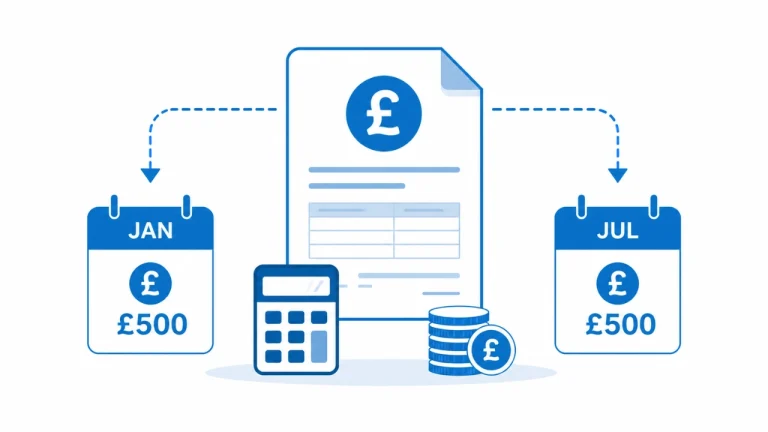
What Are Payments on Account and How Do They Work?
Payments on account are advance instalments towards your next Self Assessment bill. Learn who pays, how HMRC works out the amount, and how to reduce them.
What Is the SA104 Form?
Understand what the SA104 form is, who must complete it, and how SA104S differs from SA104F. A clear guide for UK partnership partners filing Self Assessment.
Client of the Month: M4 Handyman Ltd
Client of the Month: M4 Handyman Ltd The Work That
Why 1 in 5 Companies Still Have an Unverified PSC
Around 20% of UK companies have a PSC overdue on Companies House identity verification. Learn how to check your status, fix it, and avoid the common code mistake.