
What Are Payments on Account and How Do They Work?
- By Tax Advisor at Tax Care Accountants
- August 7, 2026
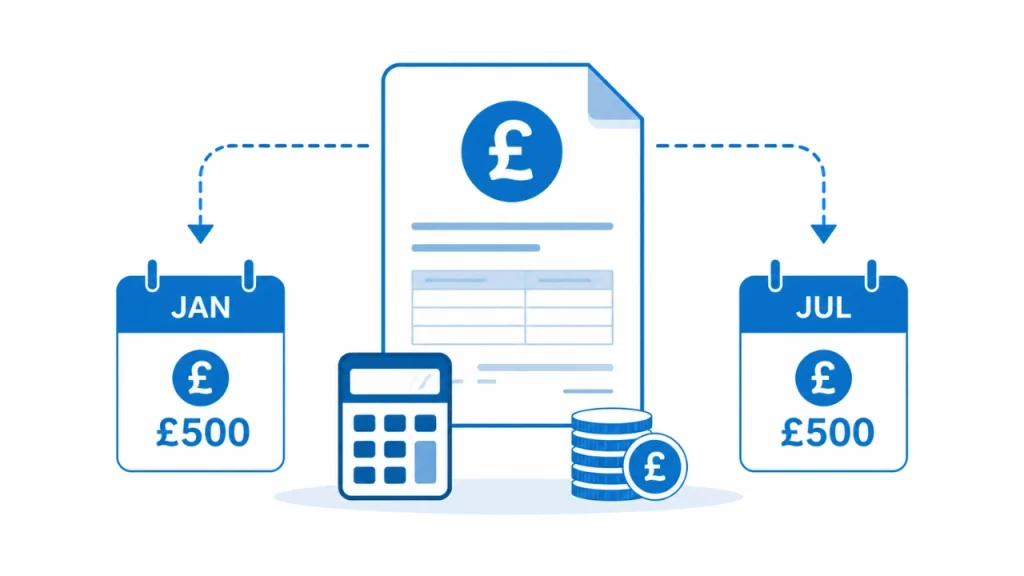
You file your Self Assessment return, expect a bill of £4,000, and HMRC asks for £6,000. Nothing has gone wrong. That extra £2,000 is a payment on account: an advance instalment towards next year’s tax, collected alongside the balance you owe for the year just filed.
Payments on account catch out a large number of sole traders, landlords and company directors in their second year of filing, mainly because HMRC applies them automatically and sends no warning until the return is submitted. This article sets out who has to pay them, how HMRC calculates the amount, when each instalment falls due, what the calculation leaves out, and how to reduce the instalments when income has genuinely fallen.
Quick Overview- Payments on account are advance instalments towards your next Self Assessment tax bill, paid in two halves.
- Two conditions trigger them: your last Self Assessment bill exceeded £1,000, and less than 80% of your total tax was collected at source through PAYE or similar deductions. Both conditions must apply.
- Each instalment equals 50% of the previous year’s income tax plus Class 4 National Insurance, after credit for tax already deducted at source.
- The deadlines are 31 January and 31 July. A balancing payment on the following 31 January settles any difference.
- Capital Gains Tax, student loan repayments and Class 2 National Insurance are excluded from the calculation. HMRC collects these in full through the balancing payment instead.
- You can apply to reduce the instalments using your HMRC online account or form SA303, but HMRC charges interest on any shortfall if you reduce them too far.
- Payments on account do not create extra tax. They change when you pay, not how much you owe.
Table of Contents
Who Has to Make Payments on Account?
You must make payments on account if your last Self Assessment bill came to more than £1,000 and less than 80% of your total tax for that year was collected at source. Both conditions must be met. If either fails, HMRC collects your whole liability as a single balancing payment on 31 January.
“Tax collected at source” means tax already deducted before the money reached you, including PAYE on employment income, deductions under the Construction Industry Scheme, and tax withheld from certain investment income.
The 80% test applies to your total tax for the year, not to each income source separately. This trips people up regularly. Someone with a salaried job and a modest freelance sideline often assumes PAYE covers them, then finds that a good freelance year pushed the untaxed portion above 20% of the total.
Who typically falls into payments on account:
- Sole traders and freelancers whose profits produce a bill above £1,000
- Landlords with rental profits outside PAYE
- Company directors drawing dividends, where most tax arrives through Self Assessment rather than payroll
- Higher earners with substantial untaxed savings, investment or overseas income
Who typically does not:
- Employees whose PAYE covers 80% or more of their total tax
- Anyone whose last bill came in at £1,000 or below
- First-time filers, who have no prior-year figure for HMRC to work from
Payments on account are automatic. HMRC applies them under section 59A of the Taxes Management Act 1970, and there is no opt-out. The only route to a lower figure is a formal claim to reduce, covered further below.
How Payments on Account Are Calculated
Each payment on account equals half of your previous tax year’s income tax and Class 4 National Insurance liability, after deducting tax already taken at source. HMRC performs this calculation automatically once your return is processed. You do not claim it, apply for it, or work it out yourself.
HMRC’s Self Assessment Legal Framework manual (SALF302) confirms the mechanism: instalments are set by reference to the previous year’s income tax liability and reduced to give credit for tax deducted at source.
A worked example across three tax years
The figures below are illustrative and use round numbers for clarity. They do not represent any actual taxpayer.
Priya works as a freelance designer. Her position develops as follows:
Tax year | Actual liability | Due 31 January | Due 31 July |
2023/24 | £900 | £900 (31 Jan 2025) | Nothing — below the £1,000 threshold |
2024/25 | £4,000 | £6,000 (31 Jan 2026): £4,000 balance + £2,000 first instalment for 2025/26 | £2,000 (31 Jul 2026): second instalment for 2025/26 |
2025/26 | £5,000 | £3,500 (31 Jan 2027): £1,000 balancing payment + £2,500 first instalment for 2026/27 | £2,500 (31 Jul 2027) |
January 2026 is the moment that causes alarm. Priya’s bill for 2024/25 was £4,000, yet HMRC asked for £6,000. The extra £2,000 was not additional tax on 2024/25 income. It was the first instalment towards 2025/26.
The pattern is worth naming plainly: in the first year payments on account apply, you pay roughly 150% of your annual bill in a single January. After that the cycle settles, because the two instalments already cover most of what falls due.
Where to find your figures
Your HMRC online account shows the instalments HMRC expects and the payments already recorded against your Self Assessment charge. Sign in through Government Gateway and open your Self Assessment section. If you filed on paper, the same detail appears on your Self Assessment statement.
Payment on Account Deadlines and What Falls Due When
Self Assessment payments fall on two dates each year: 31 January and 31 July.
Date | What is due | Relates to |
31 January | Balancing payment | The tax year just ended and filed |
31 January | First payment on account | The current tax year |
31 July | Second payment on account | The current tax year |
Following 31 January | Balancing payment | Reconciles both instalments against actual liability |
Two obligations therefore share the January date, which explains why so many people misread the total as a single bill.
The July instalment causes different problems. No filing deadline sits near it and no return prompts you, so it can arrive unnoticed six months after the January payment drained the account.
One practical point on timing: the payment must reach HMRC by the deadline, not simply be initiated. Clearing times vary. Faster Payments and debit card payments usually arrive the same or next working day, while some methods take longer. Where a deadline falls on a weekend or bank holiday, allow for the earlier working day if you are using a method that does not clear immediately.
What Is a Balancing Payment?
A balancing payment is the difference between the payments on account already made and your actual Self Assessment liability for that tax year. HMRC works it out once your return is filed, and it falls due on the 31 January following the end of the tax year.
Two outcomes are possible.
If your liability exceeds the instalments, you pay the shortfall on 31 January, alongside the first instalment for the new tax year.
If the instalments exceeded your liability, HMRC refunds the difference. Where the next instalment falls due within 30 days, HMRC will generally hold the excess and set it against that instalment rather than issuing a repayment. People expecting cash sometimes find an offset instead, so it is worth checking your statement rather than waiting for a transfer.
The balancing payment is the reason payments on account do not increase your overall tax. They shift the timing of collection. Over a full cycle, you pay what you owe, no more.
Am I paying tax twice?
No. Payments on account are advance instalments towards a future liability, not a second charge on income already taxed. The balancing payment reconciles what you paid in advance against what you actually owed, and any overpayment comes back to you as a refund or an offset against the next instalment.
Payments on Account in Your First Year of Self Assessment
You do not make payments on account in your first year of Self Assessment, because HMRC has no prior-year liability on which to base them. Your first bill is payable in full as a single balancing payment on 31 January.
The effect is deferred, not avoided. In the second year, if your bill exceeded £1,000 and the 80% test was not met, the January payment combines the full balance for year one with the first instalment for year two.
That combined figure is the single most common source of unexpected tax debt among newly self-employed people. Planning for it is straightforward in principle:
- Set money aside as income arrives, rather than reconstructing the position in January
- Keep the money in a separate account so it does not get absorbed into working capital
- Base the amount on your profit and other income, since the right percentage varies considerably between a basic-rate sole trader and a higher-rate director
- Review the position after six months, when you have a realistic sense of the year’s profit
- Assume the second January will be heavier than the first
How much to set aside depends on your circumstances, including your total income, your allowances, and whether any tax is already collected through PAYE. A quick calculation with an accountant early in your second trading year is usually enough to avoid the worst of the surprise. Speak to us about Self Assessment planning if you want that figure before January rather than after.
What Payments on Account Do Not Cover
Payments on account cover income tax and Class 4 National Insurance only. Several other amounts collected through Self Assessment sit outside the calculation entirely, and HMRC collects them in full through the balancing payment on 31 January.
Included in the calculation | Excluded from the calculation |
Income tax on self-employment profits | Capital Gains Tax |
Income tax on rental profits | Student loan and postgraduate loan repayments |
Income tax on dividends and savings income | Class 2 National Insurance |
Class 4 National Insurance | — |
HMRC’s SALF302 guidance confirms that Capital Gains Tax and student loan repayments are only included in the balancing payment. Form SA303 carries the same instruction, telling claimants to ignore both when estimating their reduced instalments. On Class 2 National Insurance, HMRC’s National Insurance Manual (NIM70450) states directly that Class 2 contributions are not included in payments on account and are paid as part of the balancing charge. Note also that liability to pay Class 2 was removed from the 2024/25 tax year onwards, although voluntary contributions remain possible for those with profits below the Small Profits Threshold.
Do payments on account include Capital Gains Tax?
No. Capital Gains Tax is excluded from the payment on account calculation and falls due in full as part of the balancing payment on 31 January following the tax year of disposal.
This matters more than it sounds. Someone who sells a rental property or a shareholding will face a January figure well above two instalments, even where those instalments were calculated correctly. The gain simply was not part of the arithmetic. Anyone planning a disposal should budget for the Capital Gains Tax separately. Read our guide to Capital Gains Tax on second homes for how the charge is calculated and reported.
How to Reduce Your Payments on Account
You can apply to reduce your payments on account if you have reasonable grounds to expect a lower income tax and Class 4 National Insurance liability for the current tax year. HMRC offers two routes: an online claim through your Self Assessment account, or form SA303 by post.
Reasonable grounds usually mean a genuine, identifiable change: a lost major client, a quieter trading period, a move into employment, extended illness, retirement, or a property sold and rental income ended. Optimism about a slower start to the year is not the same thing.
To claim online:
- Sign in to your HMRC online account using your Government Gateway credentials.
- Open the Self Assessment section and select the option to view your latest return.
- Choose the option to reduce payments on account.
- Enter the total income tax and Class 4 National Insurance you expect to owe for the current tax year, ignoring Capital Gains Tax and student loan repayments.
- Submit the claim and check that your revised statement reflects the new instalment amounts.
A claim states the amount you expect to owe, not the reduction you want. HMRC halves your estimate to set each instalment.
Timing is flexible. If you have already paid the January instalment and your circumstances changed afterwards, you can still claim before 31 July and reduce the second payment. Where you have overpaid the first instalment, HMRC can refund the excess, provided the next payment is not due within 30 days.
What happens if you reduce payments on account too much?
If your actual liability turns out higher than your reduced instalments, HMRC charges late payment interest on the shortfall, backdated to the original 31 January and 31 July due dates. Where HMRC considers a claim fraudulent or negligent, a penalty may follow on top.
Form SA303 sets both consequences out explicitly in its declaration: interest applies where the payments finally due exceed the amounts paid, and false information may result in financial penalties.
The practical test is simple. Reduce on evidence, not on hope. If your income for the year is genuinely uncertain, an accurate mid-year forecast is worth more than a guess, because interest on a backdated shortfall is not recoverable and cannot be appealed on the basis of a reasonable excuse.
Will my payments on account go down automatically if my income falls?
No. HMRC bases the instalments on the last return filed and does not adjust them because your income has changed. The figure only moves if you make a reduction claim, or if you file the following year’s return early enough for the actual liability to replace the estimate.
Filing early is often the cleaner option once your accounting year has ended and the real numbers are known. It removes the estimate entirely.
How to Pay Your Payment on Account
HMRC accepts several payment methods for Self Assessment, and clearing times differ enough to matter near a deadline.
Method | Typical timing | Notes |
Online or telephone banking (Faster Payments) | Same or next day | Usually the fastest option |
CHAPS | Same working day | Suitable for large amounts |
Debit card online | Same or next working day | Personal credit cards are not accepted |
HMRC app or bank app | Same or next day | Links through to your bank |
Direct Debit (single payment) | Around five working days first time | Allow longer for a first-time set-up |
Cheque by post | Several working days | Slowest route |
Quote your Unique Taxpayer Reference (UTR) followed by the letter K as the payment reference. Without the correct reference, HMRC may not allocate the payment to your Self Assessment account promptly. Confirm the accepted methods and current clearing times on GOV.UK before paying, particularly close to a deadline.
What Happens If You Miss or Cannot Afford a Payment on Account
HMRC charges late payment interest on payments on account from the day after the due date until the amount is paid. Interest runs daily and is not compounded.
Since 6 April 2025, HMRC has set late payment interest at the Bank of England base rate plus four percentage points, having previously used base rate plus 2.5%. The published rate stood at 7.75% from 9 January 2026, following the base rate reduction to 3.75%. Because the rate tracks the base rate, check HMRC’s current published figure on GOV.UK before calculating any liability.
Do payments on account attract late payment penalties?
Late payment penalties are not charged on payments on account themselves. The fixed 5% penalties that apply at 30 days, six months and twelve months attach to the balancing payment. A payment on account paid late attracts interest only.
There is an important qualification. HMRC’s guidance at SALF307 explains that where a balancing payment or a payment on account remains unpaid more than 30 days after the due date for that year’s balancing payment, a 5% penalty arises on the tax outstanding at that date. In other words, an instalment paid a few weeks late costs interest; one still outstanding a year later can attract a penalty through the balancing payment rules.
This distinction is worth understanding, though it should not be read as encouragement to delay. Interest at current rates accrues quickly, carries no tax relief, and cannot be appealed on reasonable excuse grounds in the way a penalty sometimes can.
Options if you cannot pay
Time to Pay. HMRC may agree an instalment arrangement for tax you cannot pay by the deadline. Contact HMRC before the due date where possible. Arrangements are generally easier to secure before penalties and interest accumulate, and interest continues to run on the outstanding balance.
Budget Payment Plan. This is a forward-looking Direct Debit for taxpayers who are up to date with their Self Assessment. It lets you pay weekly or monthly towards a future bill rather than facing it as a lump sum. You can set one up through your HMRC online account, or by telephone if you do not have access.
The two serve different situations. A Budget Payment Plan helps you get ahead; Time to Pay helps you recover after falling behind.
Payment on Account in Bookkeeping vs Payment on Account in Self Assessment
The same phrase carries two unrelated meanings in UK accounting, which produces genuine confusion in search results.
Meaning | Where it appears | |
Self Assessment | An advance instalment of income tax and Class 4 National Insurance paid to HMRC | Your Self Assessment statement and HMRC online account |
Bookkeeping | Money received from a customer or paid to a supplier that has not yet been matched to a specific invoice | Your sales or purchase ledger, sitting as an unallocated balance |
In Xero, QuickBooks or Sage, a bookkeeping payment on account shows as an unallocated credit against a contact until someone matches it to an invoice. It has no connection to HMRC instalments. Our QuickBooks bookkeeping guide covers how to allocate these correctly.
Will Making Tax Digital Change Payments on Account?
Making Tax Digital for Income Tax changes how records are kept and how information reaches HMRC. It does not replace the payment on account system. Quarterly updates under MTD are reporting obligations, not payment obligations, and the 31 January and 31 July payment dates continue to apply.
According to GOV.UK, the rollout is phased by qualifying income from self-employment and property: from 6 April 2026 for those with more than £50,000 on their 2024/25 return, from 6 April 2027 for those above £30,000 on their 2025/26 return, and from 6 April 2028 for those above £20,000 on their 2026/27 return. HMRC has not yet set a timeline for partnerships.
A related point on penalties: the ICAEW notes that under the MTD penalty regime, late payment penalties are likewise not charged in respect of payments on account, with the penalty attaching to the balancing payment or an amount due following an amendment or assessment.
MTD policy has moved several times, so confirm your own start date using HMRC’s eligibility tool rather than relying on general guidance. Read our Making Tax Digital guide for what the quarterly cycle involves in practice.
Common Payment on Account Mistakes
- Budgeting only for the balancing payment. The January total combines two obligations. Read the statement, not the tax calculation.
- Forgetting 31 July entirely. No return is due near that date, so nothing prompts you. Diarise it in January.
- Reducing instalments on optimism. Interest is backdated to the original due dates, which turns a cash-flow decision into a real cost.
- Assuming a property or share sale is covered. Capital Gains Tax sits outside the instalments and lands in full in January.
- Paying by a slow method on the deadline. A cheque posted on 31 January arrives late.
- Confusing the filing deadline with the payment deadline. They share a date but are separate obligations with separate consequences.
Conclusion
Payments on account move the timing of your tax, not the amount. HMRC collects half your previous year’s income tax and Class 4 National Insurance in January, the other half in July, then reconciles the position through a balancing payment the following January. Over a full cycle, you pay exactly what you owe.
Two things sit within your control. The first is forecasting: knowing in advance that your second January will carry roughly 150% of a normal bill removes most of the shock. The second is the reduction claim, which is genuinely useful when income has fallen and genuinely expensive when used optimistically, because interest on the shortfall runs from the original due dates.
Where your income varies significantly year to year, or where a property disposal, a change of trading structure or a move into employment complicates the picture, an accurate estimate before the deadline is worth considerably more than a correction afterwards.
This article provides general information based on HMRC guidance available at the time of writing. Rates, thresholds and interest rates change. Individual circumstances vary, and you should take professional advice before acting.
Conclusion
The reason so many companies still show an unverified PSC is rarely neglect. It is a missed second step. Verifying your identity produces one personal code, and that code has to be provided separately for each role you hold, which means twice if you are both a director and a PSC of the same company. Check your status on the People tab of the Companies House register, confirm a green tick against every director and PSC, and use the dedicated PSC service to close any gap. Doing so keeps your filings moving and your company’s public record clean well ahead of the 18 November 2026 deadline.
Get Your Payments on Account Right Before the Deadline
Tax Care works with sole traders, landlords, freelancers and company directors across Birmingham, London, Manchester and Wolverhampton, and we handle a considerable volume of Self Assessment returns each January.
We can check whether your instalments have been calculated correctly, tell you whether a reduction claim is justified in your circumstances, and give you a realistic figure to set aside for the January and July payments rather than leaving you to estimate it.
Speak to Our Self Assessment Team
Call 0121 368 1277 or get in touch to discuss your position.
Tax Care is regulated by the Institute of Financial Accountants, firm number 270075.
Get in TouchAbout The Author
Jaskeet Briah
All Posts
Outsourced Bookkeeping vs In-House: UK Cost Comparison
Compare outsourced bookkeeping vs in-house costs in the UK, including salary, employer NI, pension and software, plus when hiring becomes cheaper.
Self Assessment vs PAYE: What Is the Difference?
Self Assessment vs PAYE explained: how each system collects UK income tax, who uses which, the deadlines that apply, and what happens if you use both.
What Are Payments on Account and How Do They Work?
Payments on account are advance instalments towards your next Self Assessment bill. Learn who pays, how HMRC works out the amount, and how to reduce them.
What Is the SA104 Form?
Understand what the SA104 form is, who must complete it, and how SA104S differs from SA104F. A clear guide for UK partnership partners filing Self Assessment.
Client of the Month: M4 Handyman Ltd
Client of the Month: M4 Handyman Ltd The Work That
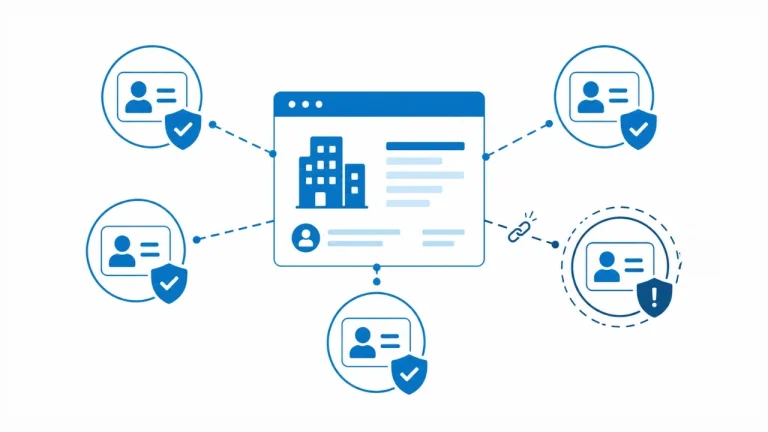
Why 1 in 5 Companies Still Have an Unverified PSC
Around 20% of UK companies have a PSC overdue on Companies House identity verification. Learn how to check your status, fix it, and avoid the common code mistake.