
Do I Have to Form a Limited Company to Employ People?
- By Tax Advisor at Tax Care Accountants
- August 21, 2026

No. You do not have to form a limited company to employ people. A sole trader can employ staff, provided you register as an employer with HMRC before the first payday and operate PAYE. Incorporation changes your liability and tax position, not your legal ability to hire.
Most people asking this question are weeks away from a first hire and want to know what to do next. This article sets out the registration steps, the real cost of an employee, your duties from day one, and when a limited company genuinely becomes the better structure.
Quick Overview
- A sole trader can employ staff. There is no legal requirement to incorporate first.
- Register as an employer with HMRC before the first payday, and no earlier than two months beforehand.
- Employer National Insurance is charged at 15% on earnings above £5,000 a year for 2026/27.
- Employment Allowance of up to £10,500 removes the employer NI bill entirely for most first-time employers.
- Employers’ liability insurance must be in place before an employee starts work, normally with £5 million minimum cover.
- The real difference with a limited company is unlimited personal liability, not the right to employ people.
Table of Contents
Do you need a limited company to employ someone?
No. Employment law and PAYE apply in the same way to sole traders, partnerships and limited companies. HMRC registers all of them as employers through the same online process, and each receives an employer PAYE reference and an Accounts Office reference.
One difference matters. A sole trader has unlimited liability, so an employment tribunal award, an unpaid PAYE bill or an uninsured injury claim falls on you personally rather than on a separate legal entity. That is a reason to consider incorporating. It is not a barrier to hiring.
How to register as an employer with HMRC
Register through GOV.UK before your employee’s first payday. You cannot register more than two months in advance.
- Register online as an employer. HMRC issues your employer PAYE reference, which identifies your scheme on every submission, and your Accounts Office reference, which you quote when paying.
- Choose payroll software. Use HMRC-recognised software, or appoint an accountant or payroll bureau to run the scheme for you.
- Collect starter details. Obtain a P45 or complete a starter checklist, and carry out a right to work check before employment begins.
- Report pay under Real Time Information. Submit a Full Payment Submission to HMRC on or before every payday, showing pay, tax, National Insurance and pension deductions.
- Pay HMRC. Payment is due monthly by the 22nd if paying electronically. Employers expecting to pay under £1,500 a month can arrange to pay quarterly.
Late registration alone does not usually trigger a penalty. Late Full Payment Submissions and late payment do, so the scheme should be live before the first payroll run.
How much does it cost to employ someone?
The wage is only part of the cost. Employer National Insurance, pension contributions and insurance sit on top.
Cost item | 2026/27 figure |
Employer Class 1 National Insurance rate | 15% above the secondary threshold |
Secondary threshold | £5,000 a year (£417 a month, £96 a week) |
Employment Allowance | Up to £10,500 |
National Living Wage, 21 and over | £12.71 an hour from 1 April 2026 |
18 to 20 rate | £10.85 an hour |
Under 18 and apprentice rate | £8.00 an hour |
Automatic enrolment earnings trigger | £10,000 a year |
Qualifying earnings band | £6,240 to £50,270 |
Minimum employer pension contribution | 3% of qualifying earnings |
Employers’ liability insurance | Normally £5 million minimum cover |
Source: HMRC, Rates and thresholds for employers 2026 to 2027.
Example. An employee paid £26,000 generates £3,150 in employer National Insurance, calculated as 15% of the £21,000 above the secondary threshold. Employment Allowance of £10,500 covers that in full, so a first-time employer typically pays nothing. The minimum employer pension contribution on qualifying earnings comes to roughly £593 a year, and insurance is usually a few hundred pounds. The headline NI rate frightens people more than the actual first-hire cost warrants.
What are your legal duties as a sole trader employer?
Your obligations begin on or before the employee’s first day.
- Give a written statement of employment particulars on or before day one.
- Pay at least the National Minimum Wage or National Living Wage for the worker’s age band.
- Hold employers’ liability insurance from an authorised insurer before work starts.
- Assess the employee for automatic enrolment and submit a declaration of compliance to The Pensions Regulator within five months of your duties start date.
- Pay Statutory Sick Pay from the first qualifying day of illness. The Employment Rights Act 2025 removed the lower earnings test and the three-day waiting period, so guidance published before April 2026 is out of date on this point.
- Provide statutory holiday entitlement of 5.6 weeks for a full-time worker.
- Meet Health and Safety Executive duties, including a written risk assessment once you have five or more employees.
- Keep payroll records for at least three years after the end of the tax year.
Employment law in Northern Ireland differs on some points, although PAYE and National Insurance rules are the same across the UK.
When does a limited company make more sense?
Structure is a separate decision from hiring, and three factors usually drive it.
Liability. Taking on staff increases your exposure to employment claims and payroll debts. A limited company keeps those liabilities within the company, subject to director duties.
Tax. Above roughly £50,000 of profit, the combination of salary and dividends often produces a lower overall tax bill than sole trader profits taxed through Self Assessment. The exact point depends on your circumstances.
Credibility. Some commercial clients, lenders and public sector buyers prefer to contract with an incorporated business.
Incorporating mid-year also means closing the sole trader PAYE scheme and opening a new one for the company, which needs planning around a pay date. Compare sole trader and limited company structures in detail.
FAQ
Can a sole trader employ their spouse?
Yes. A spouse can be employed in the same way as any other employee, and the wages are deductible against business profits. HMRC expects the pay to be commercially justified for genuine work actually performed, and the same PAYE, minimum wage and pension rules apply.
Do sole traders need employers' liability insurance?
Yes, in almost all cases. The Employers' Liability (Compulsory Insurance) Act 1969 requires cover of at least £5 million from an authorised insurer. A narrow exemption applies where the only employee is a close family member, but it does not apply to incorporated businesses.
Can a sole trader employ someone part-time or casually?
Yes. Part-time, casual and zero-hours workers still go on the payroll and must be reported under Real Time Information, even if they earn below the National Insurance thresholds.
What is the difference between an employee and a subcontractor?
Employment status depends on the working relationship, not the label on an invoice. Control over how the work is done, personal service and mutuality of obligation point towards employment. Treating an employee as self-employed leaves you liable for the unpaid PAYE and National Insurance.
How long does HMRC employer registration take?
HMRC usually issues the employer PAYE reference within about five working days, although it can take longer at busy times. Register early enough to run the first payroll on time.
Conclusion
You can hire your first employee as a sole trader without changing your business structure. What matters is registering with HMRC before the first payday, running PAYE correctly under Real Time Information, and having insurance and pension duties in place from day one. Incorporation is worth reviewing separately, on liability and tax grounds, once the business supports it.
Talk to Us About Your First Hire
Tax Care Accountants sets up PAYE schemes and runs monthly payroll for sole traders across Birmingham, London, Manchester and Wolverhampton. That covers HMRC registration, Full Payment Submissions, payslips and automatic enrolment.
Call 0121 368 1277 or email info@taxcare.org.uk to talk through your first hire before the payroll date.
Payroll & PAYE Support
Get professional support with your payroll setup and ongoing PAYE requirements.
See Our Payroll & PAYE ServicesAbout The Author
Charles Howard
A content writer specializing in accounting, tax, and finance topics, focused on creating clear and practical insights. Part of Tax Care Accountants, a team that includes members of the Institute of Financial Accountants (IFA).
All Posts
Do I Need a Limited Company to Employ People? UK Rules
No, you do not need a limited company to employ people. A sole trader can employ staff by registering with HMRC. Here are the steps, costs and legal duties.
Do I Need a Bookkeeper If I Use Xero or QuickBooks?
Xero and QuickBooks record your transactions but do not check them. Here is when a UK business still needs a bookkeeper, and when the software is enough.

Outsourced Bookkeeping vs In-House: UK Cost Comparison
Compare outsourced bookkeeping vs in-house costs in the UK, including salary, employer NI, pension and software, plus when hiring becomes cheaper.
Self Assessment vs PAYE: What Is the Difference?
Self Assessment vs PAYE explained: how each system collects UK income tax, who uses which, the deadlines that apply, and what happens if you use both.
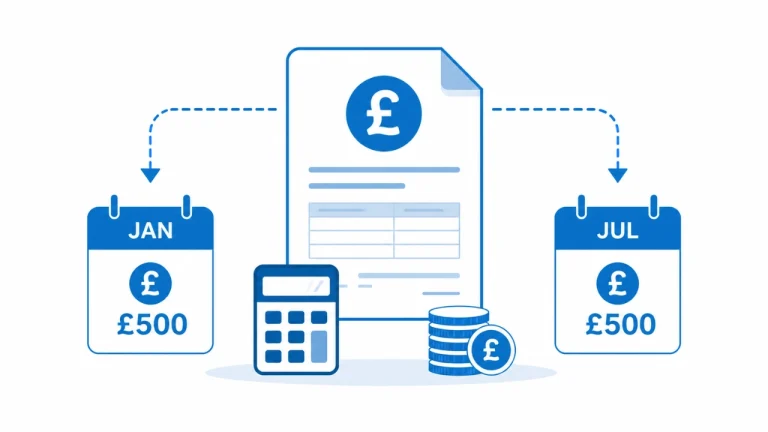
What Are Payments on Account and How Do They Work?
Payments on account are advance instalments towards your next Self Assessment bill. Learn who pays, how HMRC works out the amount, and how to reduce them.
What Is the SA104 Form?
Understand what the SA104 form is, who must complete it, and how SA104S differs from SA104F. A clear guide for UK partnership partners filing Self Assessment.